

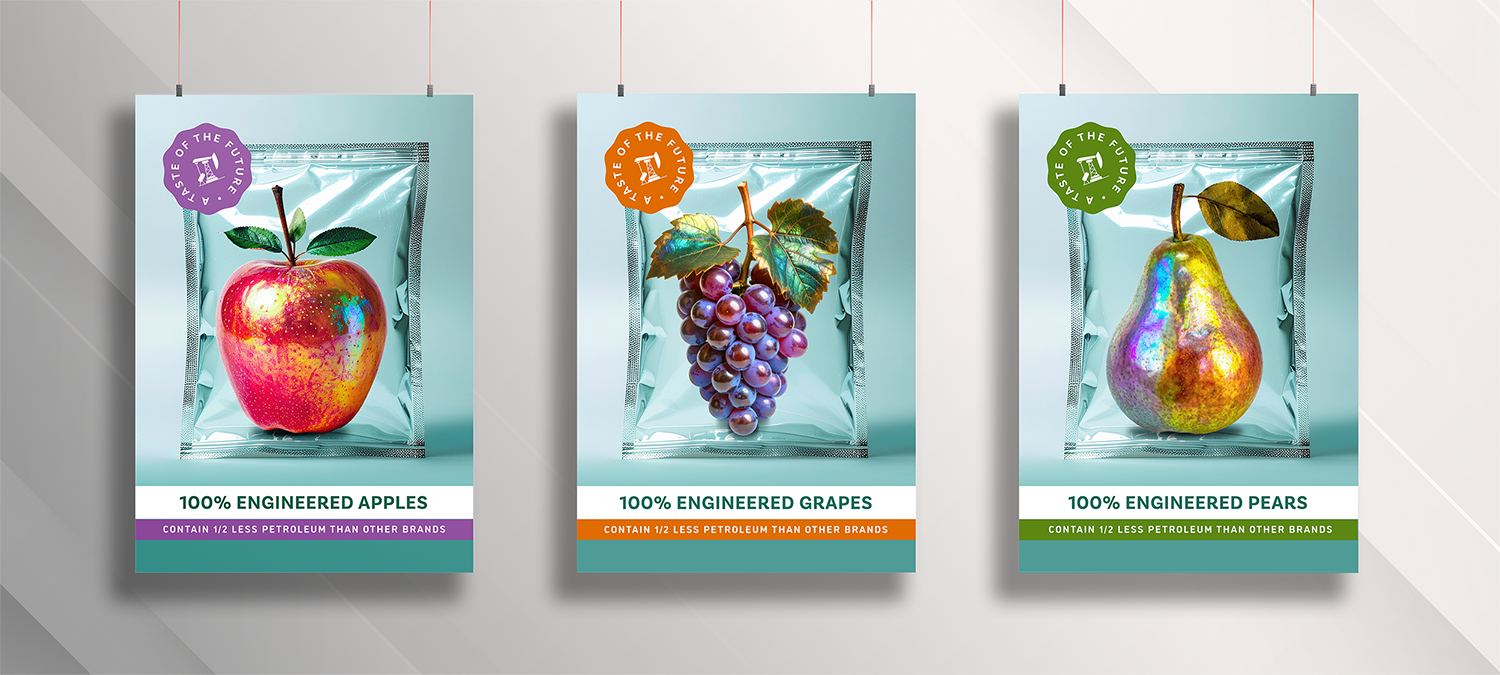

Future Frames is a curated exhibition that showcases posters and short videos addressing social, cultural, and environmental issues/resolutions related to the growing presence of AI in our lives. As part of the University of Maryland’s Arts for All initiative, this exhibition celebrates interdisciplinary collaboration, community engagement, and the creative possibilities of human-machine partnerships. My poster project has been selected as one of the finalists for the show.
- October 13-31, 2025 // Herman Maril Gallery (University of Maryland).
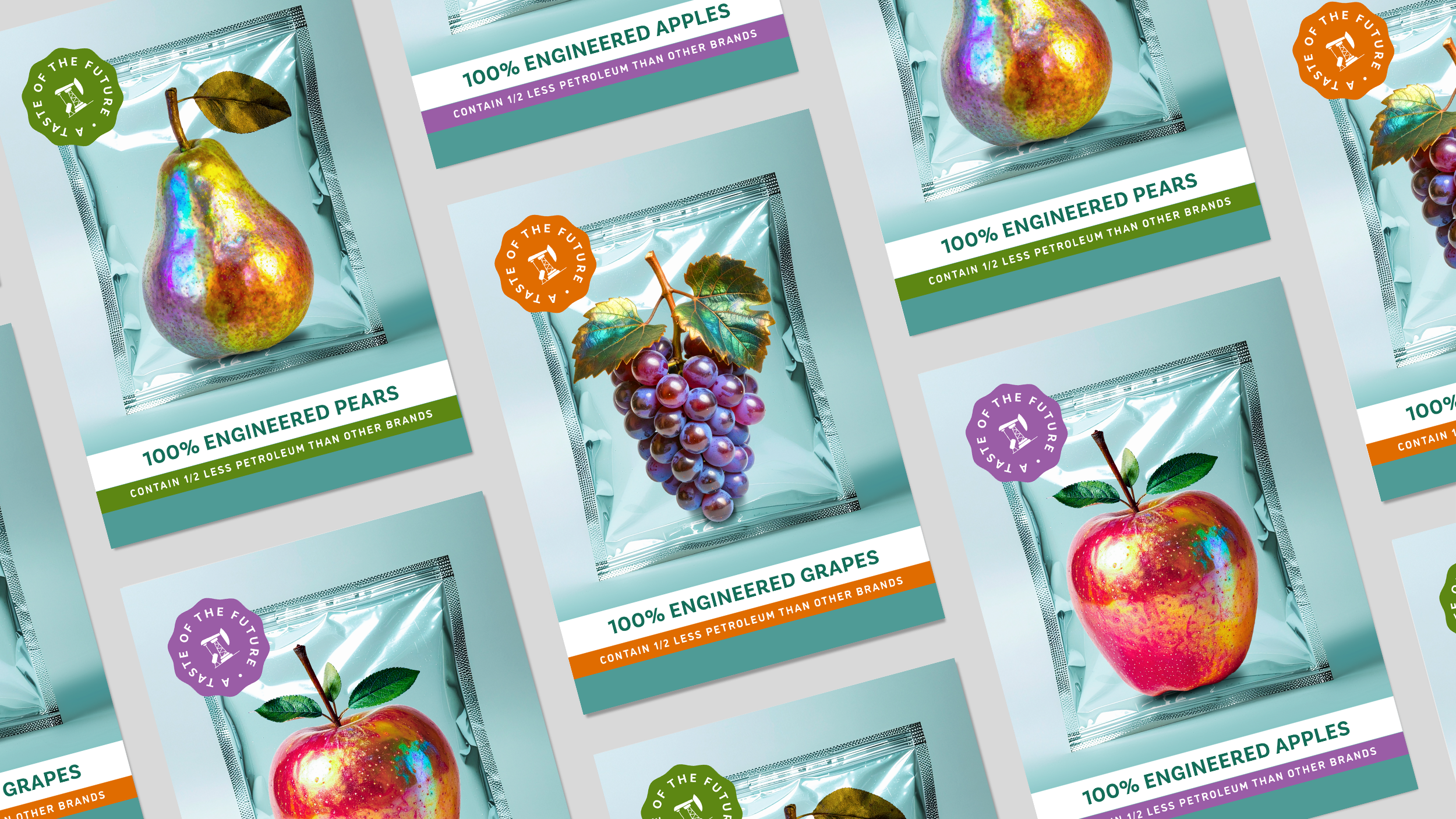
A Taste of the Future
Presented at the University of Maryland, my poster series explores what grocery marketing campaigns may look like in the near future.
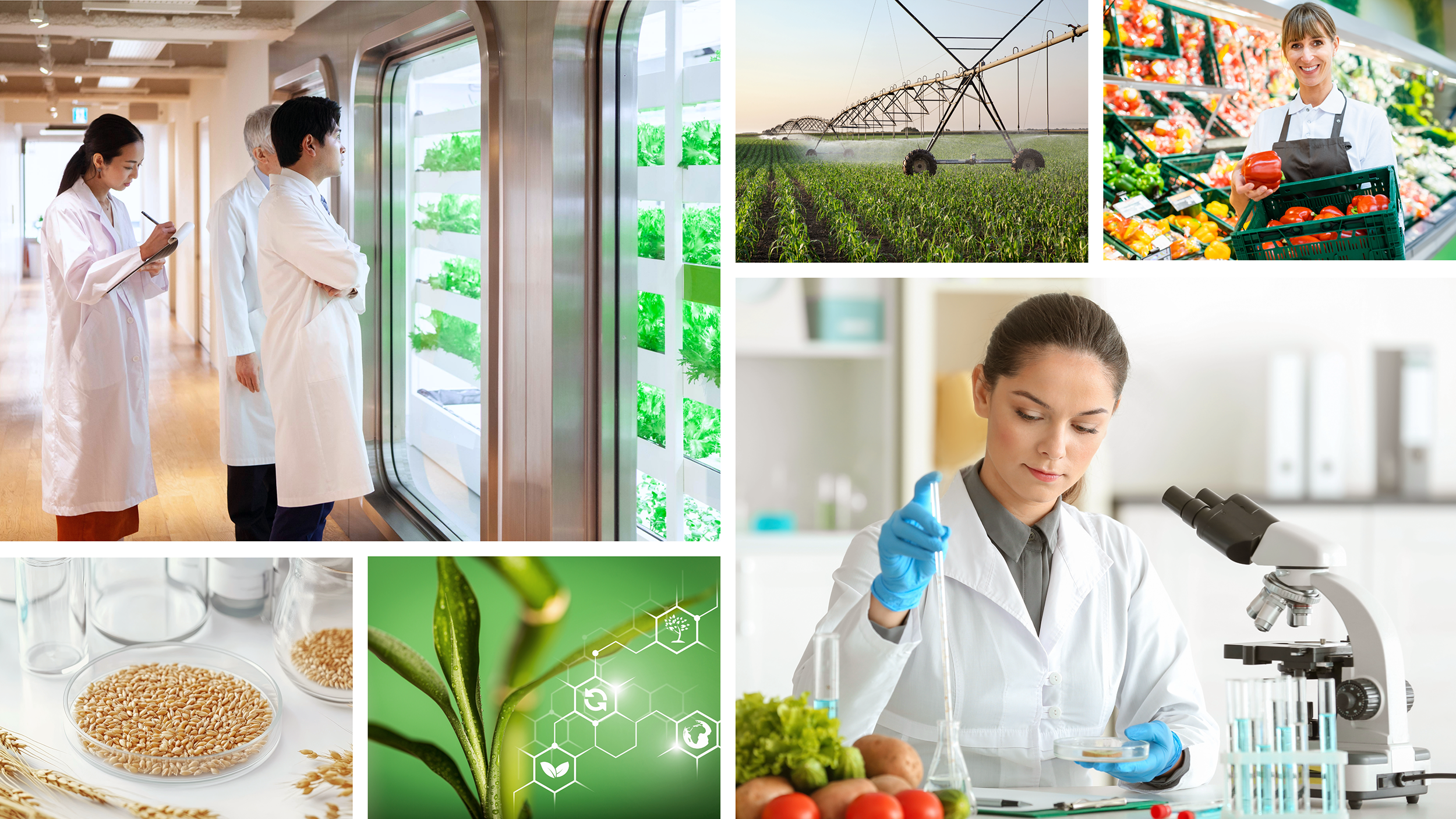
People have concerns about food safety because of bioengineered produce, pesticides, and artificial food wax. AI technology could help reduce these risks and improve safety throughout the supply chain. It can also help food scientists create new products by analyzing large amounts of data on consumer preferences and ingredient combinations.
However, using opaque and unaccountable AI algorithms in food production can erode consumer trust in the food system. Genetically modified fruits and vegetables have raised questions about creating new allergens. Will the food we eat become more toxic and harmful?





 Dasha Wagner